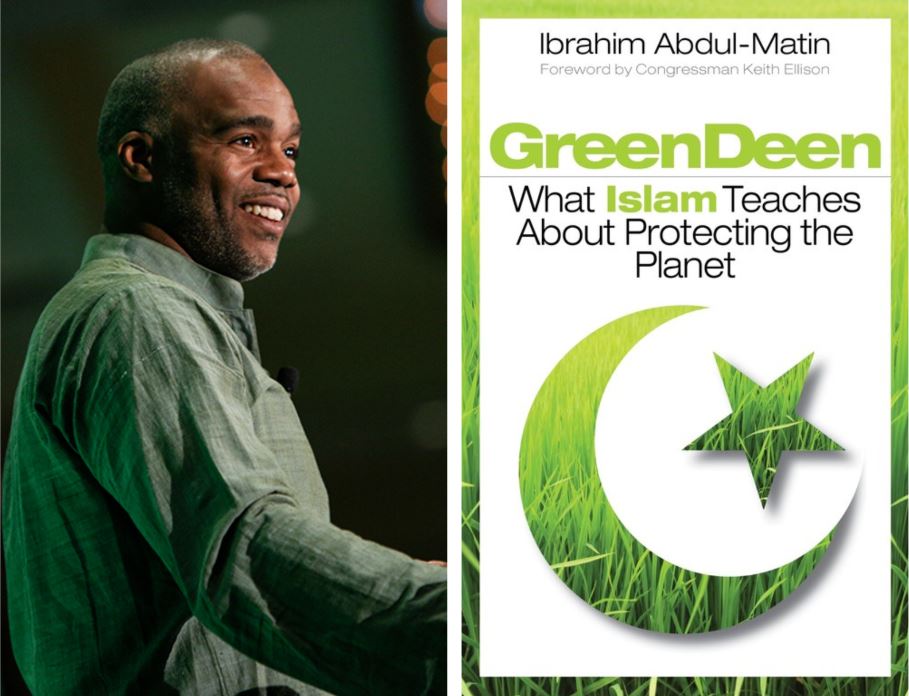
Abdul-Matin begins his novel by sharing that Islam is a Deen, which means a religion, a path, and a way of life. The premise of his book is that the Earth is a mosque, and we need to protect it and take care of it. Through his experiences as a policy advisor and as a Muslim, he shares unique insights within the four sections of the book: Waste, Watts, Water, and Food. While there are certainly connections to Islam throughout each section, he also shares knowledge and advice that are applicable to all readers without delving into their spirituality.
Society’s mass consumption stood out greatly within the Waste section. The unique history behind Watts, or Energy, was eye-opening for me. As were Abdul-Matin’s insights into Water and Food. He utilizes a personable way to connect with readers to share his knowledge about the practices and policies that have led to our current environment, along with what it means to be socially responsible as a company and as a consumer. Through empowering the reader by sharing the effects of the power of our choices to shape our world, he inspires readers to take positive steps to protect and nurture our environment.
As Abdul-Matin writes, “The Earth is a mosque.” Through taking the steps to treat the Earth as a place of worship, as a place that is our refuge, and a place where we can both learn and rest, we can move towards protecting our environment for both ourselves and future generations. This book is a fascinating read on the current state of our environment, how it came to be this way, and how we can work to protect and nurture our planet.
Happy New Year 2021 and welcome to our first issue of the Green Leaf Newsletter!
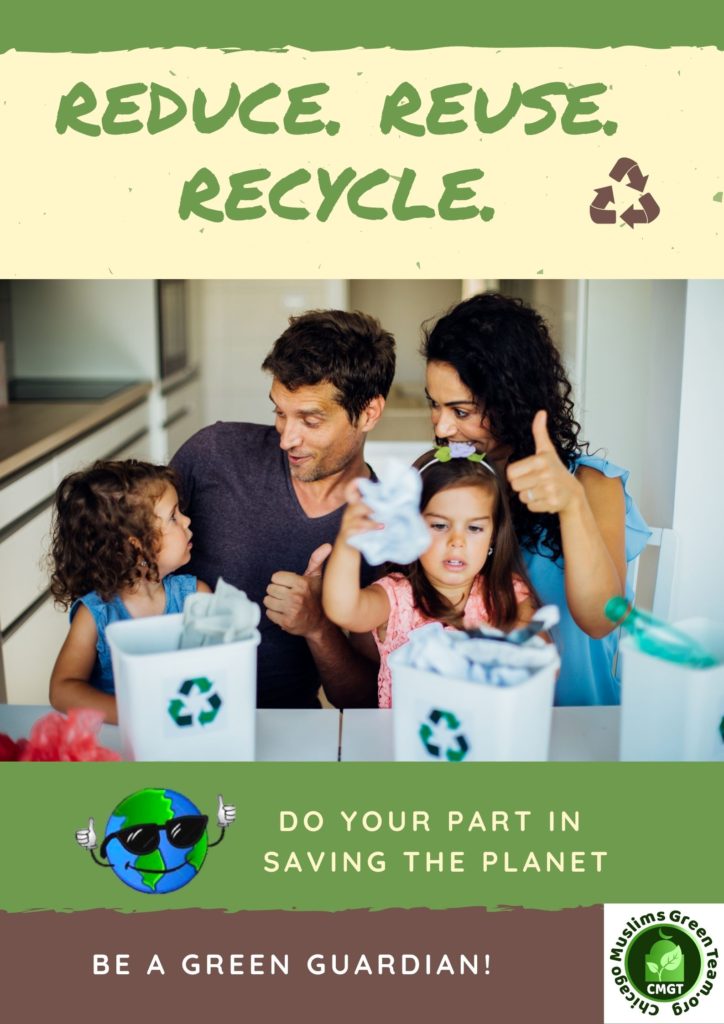
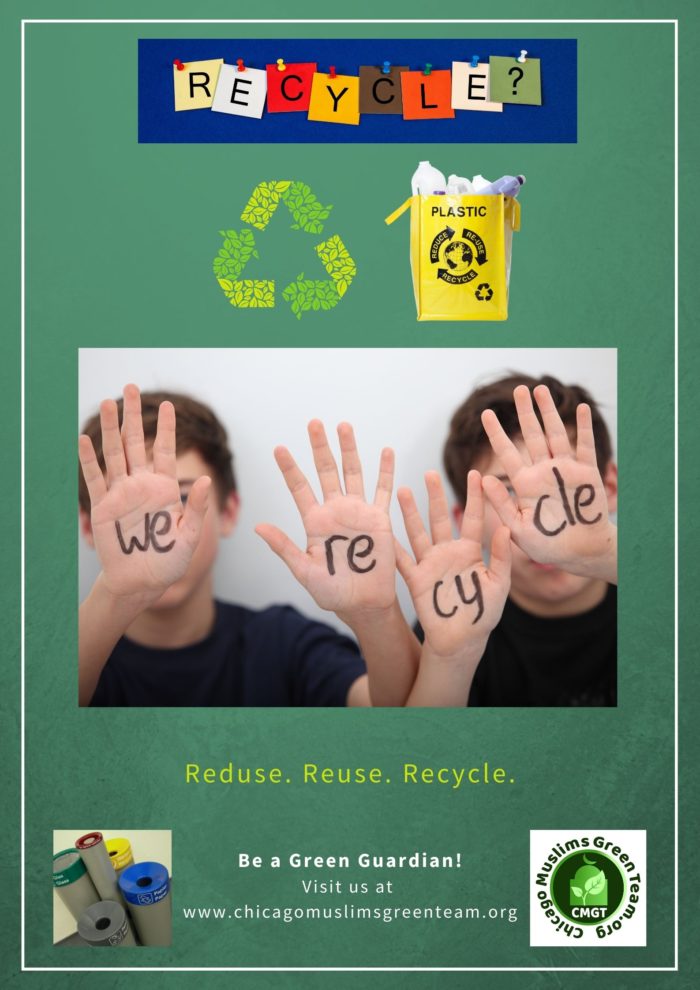
Here together we are going to have fun learning about different ways to become a “Green Khalifah” – a person who takes good care of self, family, friends, the environment and our precious planet. Our ailing earth needs us now to do our part in saving and helping it heals. This month let’s talk about RECYCLING and PLASTIC BAGS.
What is “recycling”?
Recycling is collecting certain items that would be thrown away in the trash and turning them into new items that can be used again.
Why is it important to recycle?
Recycling is important because it helps the planet we live on! When we recycle, we create less trash to keep everything in our environment clean and healthy.
How do I recycle?
STOP! Before you throw that thing away in the trash, ask yourself: Can this item be used again? Can it be recycled?
There are many items that we use on a day-to-day basis that can be recycled such as: water bottles, plastic containers, soda cans, newspapers, electronics, cardboard boxes, and much more! Often times if you have seen this symbol:
This item can be recycled!
Now, not everything can be recycled. Certain things have to be thrown away in the trash such as styrofoam, broken glass, straws, pizza boxes and more. Use the link below to learn more with Gus, at National Geographic Kids about what items can be recycled, composted or thrown away while playing the game Recycle Roundup to win all the points! Enjoy this game!!!
What about plastic bags?
Plastic bags are made out of plastic, so they should be recycled right?
Technically yes! Unfortunately, many places that process recycling materials advise against it because the plastic bag’s handles often damage the machines used to sort out and process recycling materials. As a result, millions of plastic bags are thrown away in the trash which often ends up harming humans and animals on land and in the oceans. Do you know that it takes about 500+ years for each plastic bag to photodegrade!!!
Fortunately, there are many different projects you can do at home to recycle your own plastic bags. Can you think of any creative ways to do this?
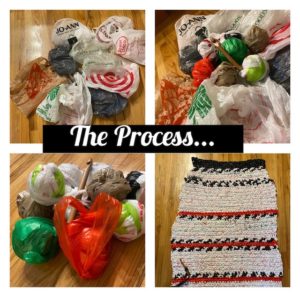
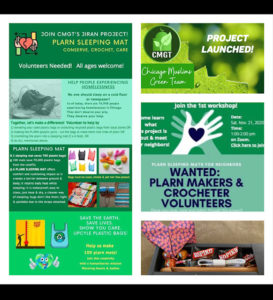
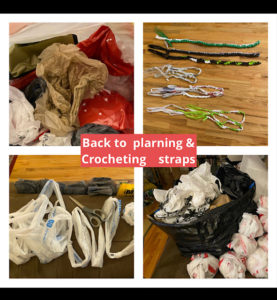
FYI at the Chicago Muslims Green Team, we have a cool project called, the PLARN Sleeping Mat: Conserve, Crochet, Care . The term “plarn” means plastic yarn. Volunteers in this project collect CLEAN recycled plastic bags and creatively crochet them into a sleeping mat. They then distribute the sleeping mats made to our neighbors who need them especially for folks who don’t have housing or beds. Each mat takes about 700 plastic bags to make. That means, we can save about 700 plastic bags from the landfills. The Plarn Project team aims to make about 100 plarn sleeping mats by April 2021 insha Allah. How many plastic bags do we need – guess??? YES! We can save approximately 70,000 plastic bags from the landfills. How cool is that – saving both our planet and helping our neighbors in need? Check out the project and volunteer if you can.
If you can’t find any plastic bags at home, there are certain local stores near you such as Target, Walmart, Jewel-Osco, Harris Teeter and many others that will have bins located inside to recycle those plastic bags for you. For your information, those bins will then be sent to specific recycling centers that have special equipment to properly recycle your plastic bags.
Here are 7 reasons why it is important to recycle your plastic bags:
As you can see recycling plastic bags is an incredibly important step in helping our environment and we all have to work together in any way that we can to help heal our planet! So, keep recycling!!!
In this calming video, we learn how to create a self-watering planter using plastic bottles that would otherwise be recycled. There are many resources out there, so if you don’t have access to shoestrings or chemical-free wet wipes (as used in this video), feel free to check out other tutorials. You can grow most herbs and vegetables hydroponically, but be mindful that some will need to be transplanted to a pot full of soil once they establish a root system. This is a great way to stay connected to nature during the winter and it’s incredibly rewarding to see the plants grow from your efforts.
What herb or vegetable are you eager to grow first?
Self Watering Planter using Plastic Bottle Youtube video by HODUNE
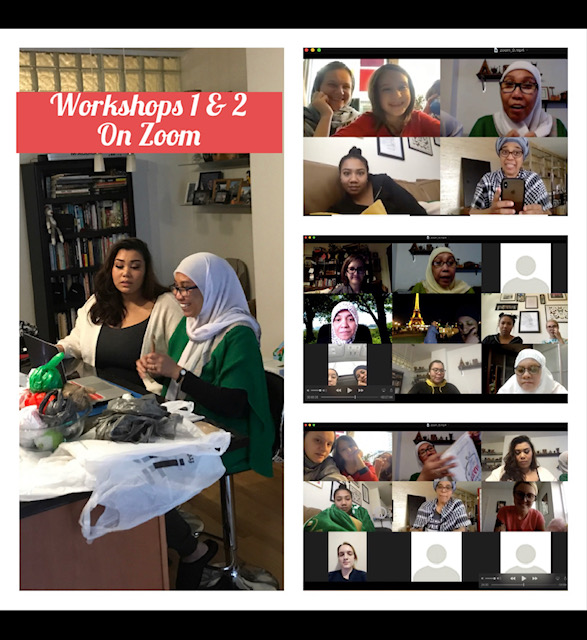
This PLARN Sleeping Mat: Conserve, Crochet, Care project, brings together diverse community members of ages 5 to 100 in raising awareness about conservation, the dangers of plastic bags and keeping non-recyclable plastic bags out of landfills. This project aims to make 100 PLARN sleeping mats This means saving about 70,000 plastic bags from landfills, lakes and waterways!
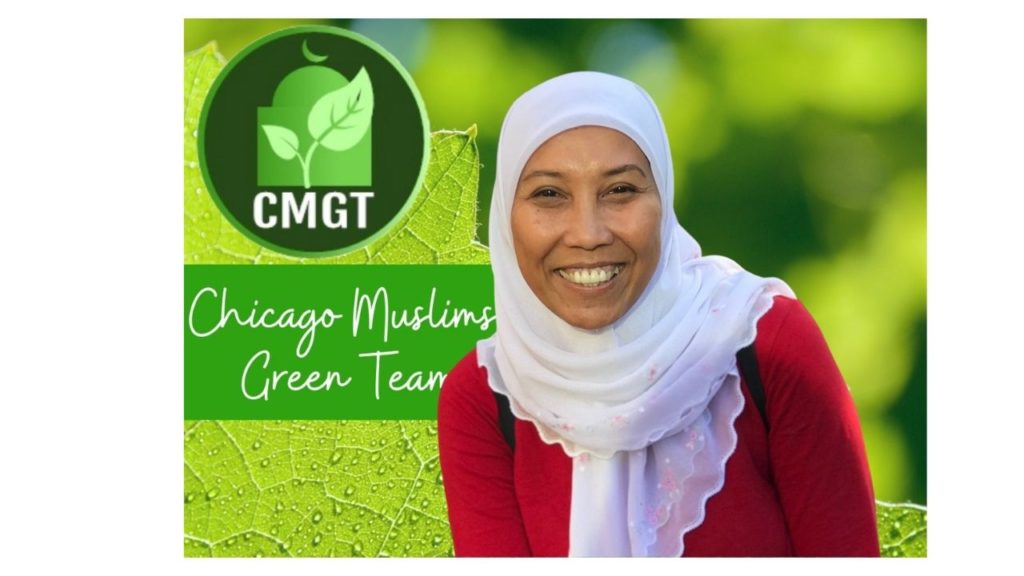
Protecting and saving our ailing planet begins with a willingness to make changes. Making a change needs courage. Taking that first step towards change can be frightening, disturbing, or disheartening. Finding the right group of people for support can help one to summon the courage needed to take the leap forward toward empowering change. Dr. Rohany Nayan is the CMGT Education Team Leader. She found her courage to make an empowering change when she met with and then joined the Chicago Muslims Green Team (CMGT).
When Rohany first moved to Chicago in 2017, she noticed two disturbing things about her new home. The first was the ubiquity of homelessness in the city. The second was the widespread mismanagement of unrecycled plastic trash. Her reading on the topic of panhandling in Chicago led her to learn more about the issue of homelessness.
In the United States, it is estimated that there are over half a million of people who are homeless. In the city of Chicago alone, it is estimated that 80,000 people were homeless before the onset of the COVID-19 pandemic. It is feared that this number may be much higher during this crisis. Sadly, the management of homelessness too often focuses on managing the problem rather than seeking comprehensive solutions. Homeless people face multiple bureaucratic hurdles. This becomes a formidable administrative labyrinth for those looking for safe, permanent housing. Many end up feeling defeated and resign themselves to living on the streets. Clearly, there is a lot that needs to be done in order to fight the systemic problems related to homelessness.
Rohany’s experience with CMGT has increased her awareness about environmental issues, especially the problems related to the wasteful use of plastic bags. CMGT, through its educational programs, strives to build bridges between diverse communities. By doing this they hope to increase awareness of our ecology, natural resources, and the protection of our environment. This is accomplished by engaging social justice issues while promoting a mindful, sustainable, and eco-friendly lifestyle inspired by Muslim traditions.
Research on plastic bags reveals the love-hate relationship that we have with them. Despite being convenient, durable, and easy to use, we also hate the fact that plastic bags pose many dangers to our environment. According to the WorldWatch Institute’s report in 2004, Americans use and throw away 100 billion plastic grocery bags a year. Less than 1% of these plastic bags are recycled. They tend to clog machines at recycling facilities and are costly to recycle. As a result, they often end up in landfills where they take about 500+ years to photodegrade. Furthermore, plastic bags are also dangerous as they break down into tiny toxic particles that contaminate the soil and local waterways, and threaten the food chain when animals accidentally ingest them.
How might we change this situation? Is it possible to change despair into hope? Rohany often turns to her faith as a Muslim when thinking about solutions for problems. In this case, the source of her inspiration comes from this particular verse in the Qur’an:
“Indeed, Allah will not change the condition of a people until they change what is in themselves,” Sūrat al-Raʿd (The Thunder, 13:11).
The opportunity to make a difference came through CMGT when she took a course offered by the Chicago Conservation Corps (C3), a program of the Chicago Academy of Sciences/Peggy Notebaert Nature Museum. The C3 Leadership course recruits, trains, and supports community leaders in working together to improve the quality of life in our neighborhoods and schools through environmental service projects.
For her final project in the course, focusing on concepts such as rethinking, reusing, and conservation, Rohany designed a project that weaves creativity and upcycling into one mission – to conserve, crochet, and care for neighbors and the environment by making PLARN (plastic yarn) sleeping mats. From November 2020 until April 2021, participants in this project will collect recycled plastic bags and transform them into useful, comfortable PLARN sleeping mats that hopefully will warm hearts and bodies.
The PLARN sleeping mats offer comfort and cushioning as they create a barrier between the cold and hard ground and one’s body. Additionally, one can easily clean their mat by hosing it down and leaving it to dry. A PLARN sleeping mat retains one’s body heat while sleeping and most of all, provides a cleaner way of sleeping as bugs do not like plastic bags. Each PLARN sleeping mat takes approximately 700 plastic bags to make and saves those bags from our landfills. The PLARN sleeping mats are useful and are needed especially by our local neighbors who may be experiencing homelessness.
Rohany hopes to make a positive impact on our planet and neighbors in need. Through this PLARNSleeping Mat: Conserve, Crochet, Care project, Rohany brings together diverse community members of ages 5 to 100 in raising awareness about conservation, the dangers of plastic bags and keeping non-recyclable plastic bags out of landfills. This project aims to make 100 plarn sleeping mats This means saving about 70,000 plastic bags from landfills, lakes and waterways!
Our ailing earth and our neighbors need our courage to make necessary changes possible. Rohany wants to be a mindful Muslim and calls on everyone to be a “mindful” individual who practices mindfulness where one develops greater attention and care for actions, thoughts, feelings, and inner states of being and avoids israf (wastefulness). It is important to remember that we are NOT separate from nor are we unaffected by our surroundings. We need to welcome and embrace practices that have neither negative impact on our environment now nor in the future. A reminder from our beloved Prophet Muhammad (peace be on him) who said, “Should you wish to act, ponder well the consequences. If good, carry on. If not, desist” (Ibn al-Mubārak).

 This item can be recycled!