
Oaktober
October is the month to celebrate Oaktober in the state of Illinois. It was established in 2015 after Governor Bruce Rauner declared October as Oak Awareness Month to honor the importance of oak trees in our state. This initiative resulted from the dedicated efforts of the tree community, coordinated by the Chicago Region Trees Initiative (CRTI) at the Morton Arboretum.
Often referred to as the “Kings of Biodiversity,” oak trees support approximately 2,300 species, including birds, insects, and fungi. Oak trees hold significant cultural and historical meaning. The Morton Arboretum wrote, “Oaks contribute greatly to communities and cultures around the world. Mature oaks provide shade and cooling in urban landscapes, and their great size imparts a sense of strength and inspiration.”
Additionally, the National Park Service stated, “It’s hard to talk about oak trees without slipping into tales of myth and legend. Oaks appear so often in the story of humanity that it could scarcely have been written without them—literally.”
In the U.S., an oak tree known as the Charter Oak played a significant role in the history of American independence and the fight against the British. It is depicted on the Connecticut Tercentenary commemorative stamp, which was first offered for sale at the post office in Hartford, Connecticut, on April 26, 1935.
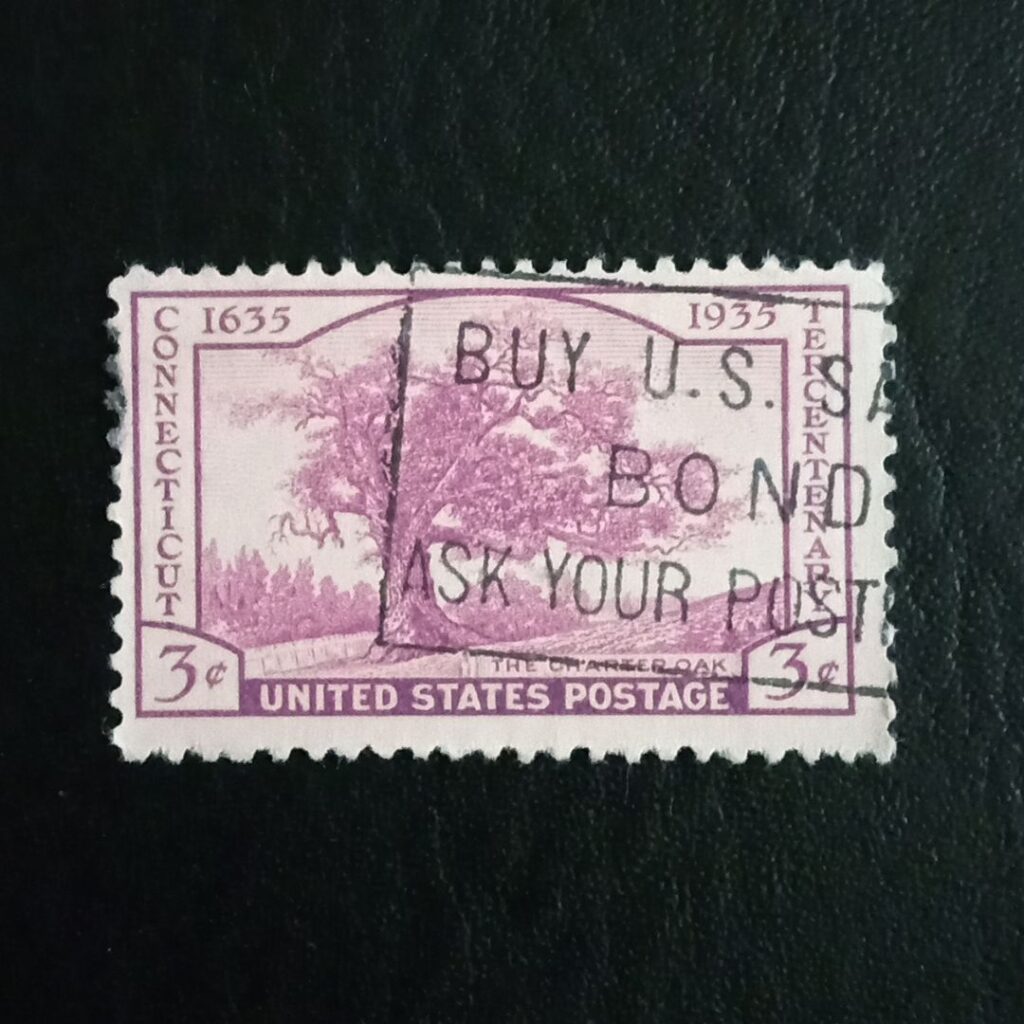
The Charter Oak was an enormous white oak tree growing on Wyllys Hill in Hartford, Connecticut, from around the 12th or 13th century until it fell during a storm in 1856. In 1662, Connecticut colonists hid the Royal Charter of Connecticut within the tree’s hollow to thwart its confiscation by the English governor-general.
A picture of an oak tree was also used by the United Nations on stamps to symbolize World Refugee Year in 1960, which were issued by 70 countries. Here are two of them from Costa Rica and Guinea, West Africa.
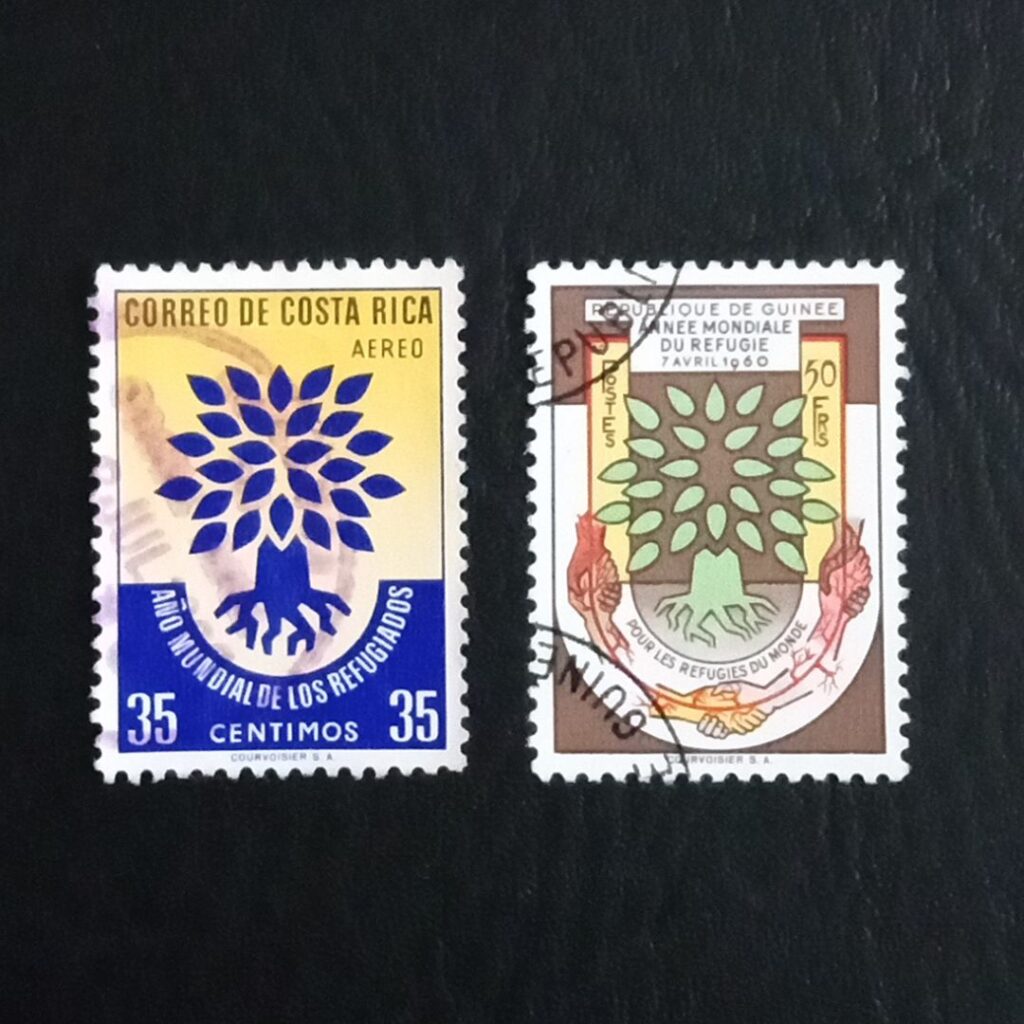
There are many stamps from around the world that feature oak trees, oak leaves, or acorns. An article titled “Oaks on Postage Stamps,” published by the International Oak Society, showcases over 100 oak-related stamps.
As someone currently working in the field of tree equity with the Chicago Muslims Green Team, I am a proud owner of several stamps related to trees from the Muslim world. Here are stamps from the UAR (United Arab Republic), which at that time was the union of Egypt and Syria. They commemorate the celebration of the Tree Festival in 1967 and Tree Day in 1959.
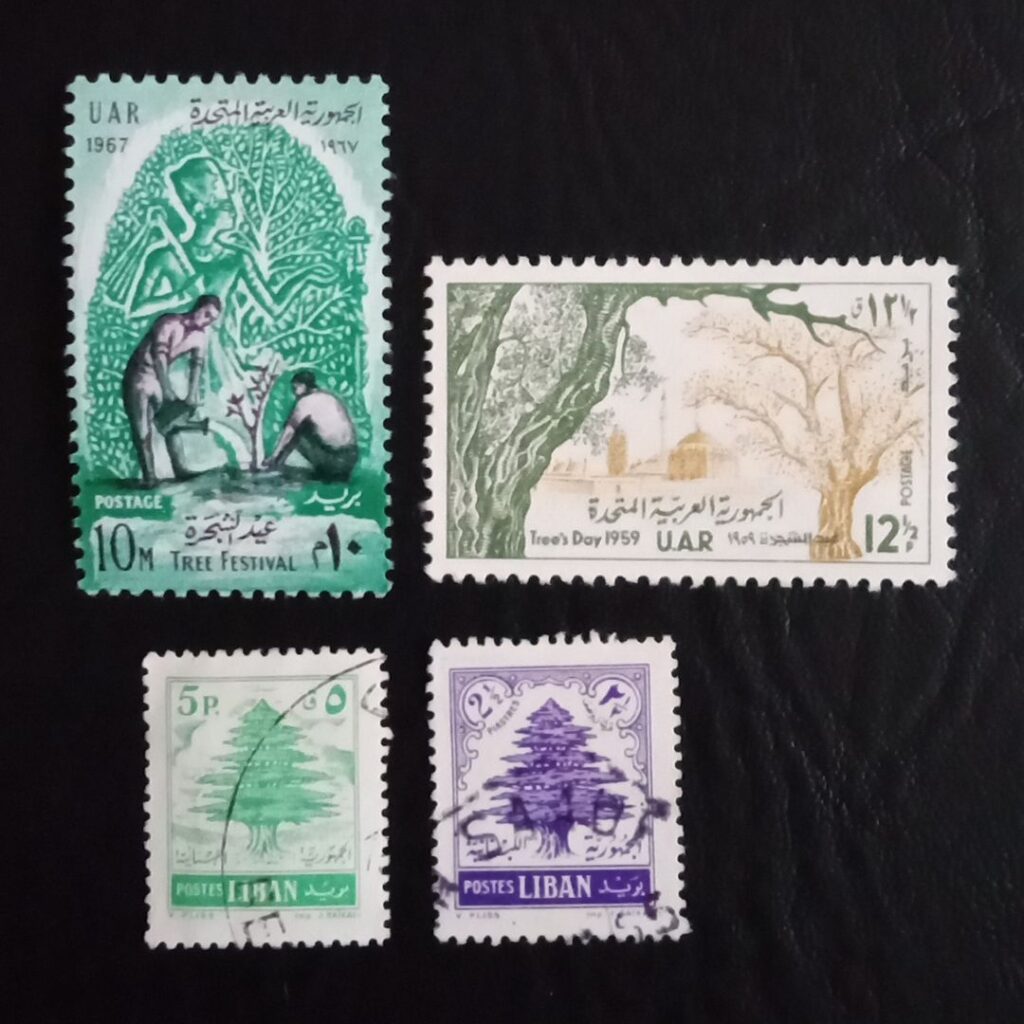
The other stamps are from Lebanon, depicting cedar trees, the iconic evergreen conifers native to the region, known for their height, longevity, and historical significance. Cedar trees are a national symbol of Lebanon, also featured on the country’s flag, and have been used for construction and in religious texts for thousands of years.
I am also pleased to have recently acquired the First Day Cover of the 5th World Forestry Congress, issued by the United Nations in New York in 1960. The Congress was held in Seattle, Washington, that year.
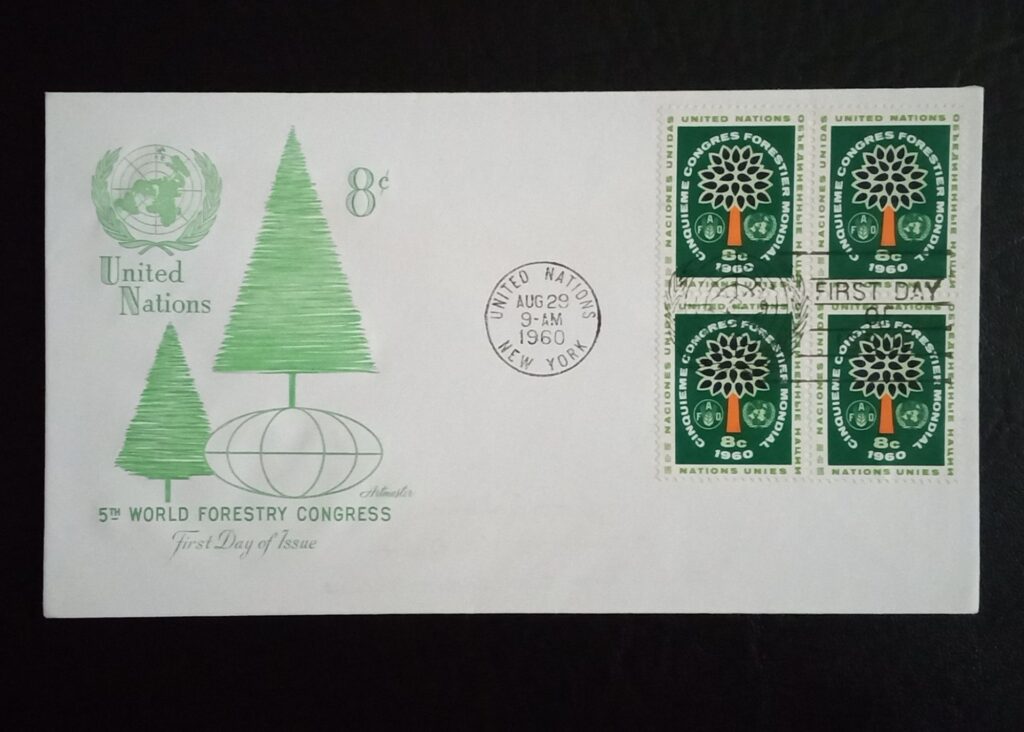
According to the organizer, the FAO (Food and Agriculture Organization of the United Nations), the most recent World Forestry Congress took place in Seoul, South Korea, in 2022 under the theme “Building a Green, Healthy, and Resilient Future with Forests.” The next Congress will be held in Peru in 2027. President of Peru, Dina Boluarte, said the election comes “in recognition of our nation’s commitment to conservation, the sustainable management of our forests, and the fight against climate change.”
Hispanic Heritage Month
In the field of trees, we often discuss how the American native trees are more favorable to be planted because they are generally more resilient. The Hispanic Heritage Month also can tell stories about the resiliency of the native people in the American continent. It is celebrated nationally in the U.S. from September 15 to October 15.
According to the Smithsonian National Museum of the American Latino, it began as a week-long celebration in 1968 under President Johnson and was expanded to a month by President Reagan 20 years later, in 1988. The month-long celebration provides more time to properly recognize the significant contributions that Hispanic/Latino Americans have made to the United States.
Additionally, according to the American Immigration Council, in the last decade, the Hispanic community grew by more than 20 percent, reaching 65.1 million in 2023. U.S.-born Hispanics grew by 25 percent. Hispanic communities fuel every sector of American life. They have always been here, and will continue to be here, shaping the present and the future of this country.
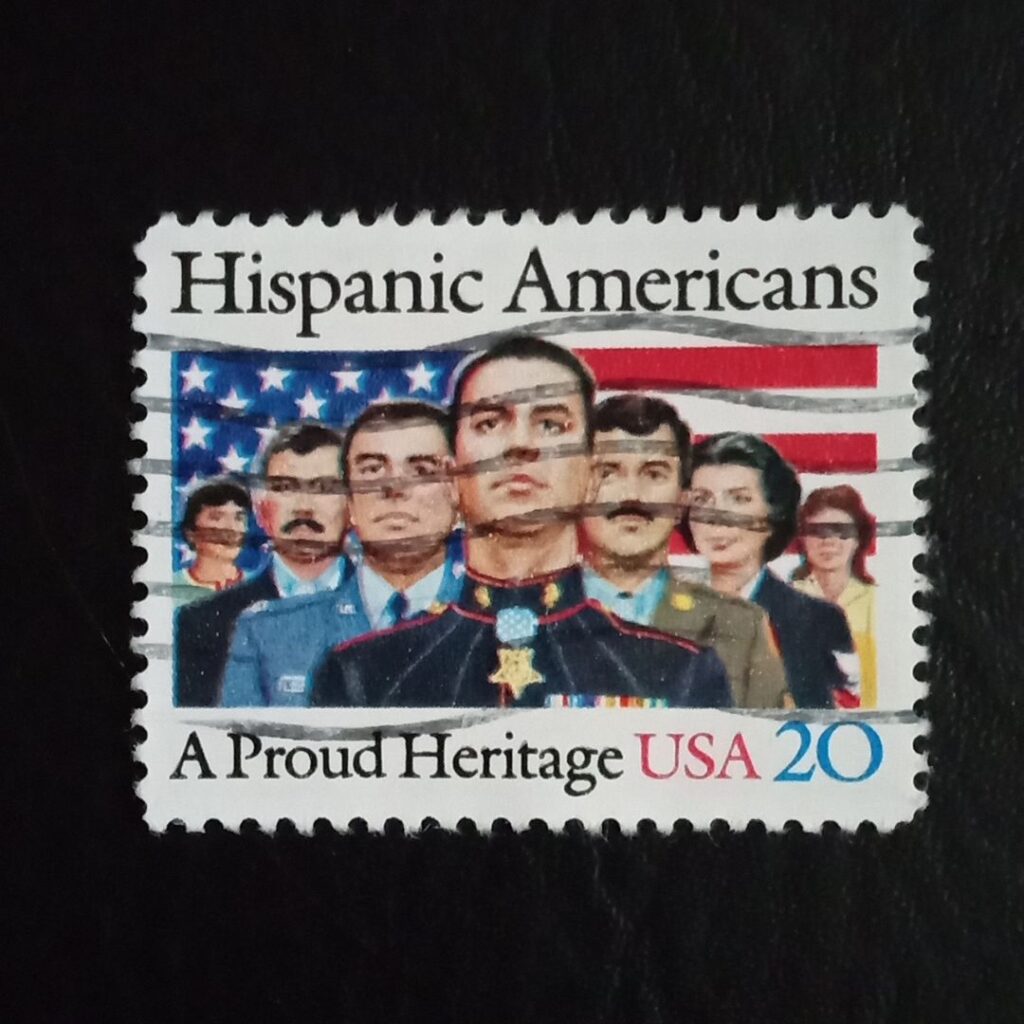
A commemorative stamp honoring Hispanic Heritage Month was issued in October 1984 to recognize all Hispanic Americans from various walks of life. In 2023, the USPS published a booklet titled “Hispanic People and Events in U.S. Postage Stamps“. It celebrates many Hispanic individuals, places, and achievements, including explorers, pioneers, statesmen, athletes, entertainers, artists, and educators—people who have made a difference in our culture and history.
National Stamp Collecting
I first learned that October is the National Stamp Collecting Month from the American Philatelic Society (APS) Newsletter. Stamps were invented in 1837 as a means for people to pay for their mail, and it wasn’t long after that that people started collecting them. I have been collecting stamps since I was young, growing up in Jakarta, the capital city of Indonesia.
In the 80-90s, there was no internet and email there. We relied on mails addressed to our home. Every time the postman delivered a mail, I was always excited to see what kind of stamp was affixed on the envelope, so I could add it to my collection. It was a cheap hobby for me and a form of recycling.
The Smithsonian National Postal Museum wrote, “What can you call a hobby which teaches so much—in addition to providing fun and pleasure? Stamp collecting helps instruct the collector in geography, biography, history, culture and art. Stamps are miniature gateways to the world.” That is the main reason why I love collecting stamps!
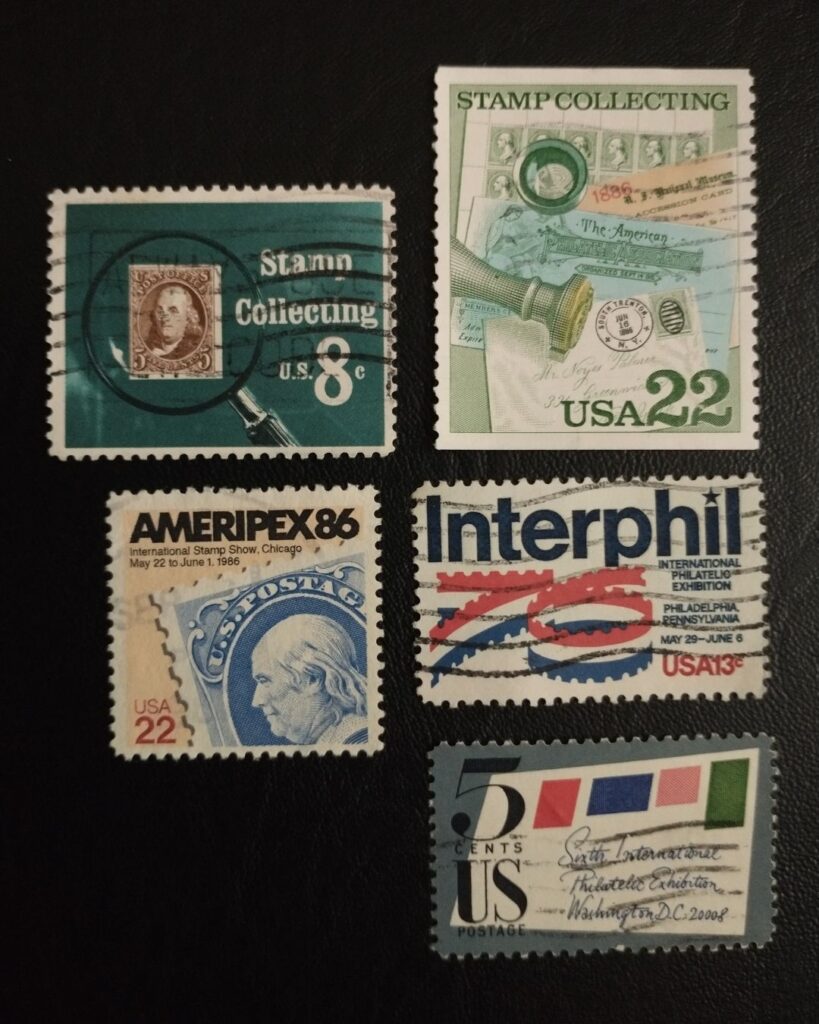
The stamps I have here feature those from 1972 and 1986, celebrating the stamp-collecting hobby. The other stamps commemorate the International Philatelic Exhibition in Washington, D.C. in 1966, Philadelphia in 1976, and Chicago in 1986.
There is a concern that stamp collecting is a dying hobby. New generations prefer using emails over mailing letters. They also tend to collect trendy items like Pokémon or baseball cards. Hopefully, there will always be a generation who appreciates vintage or antique items like postage stamps and recognizes the opportunities that stamps can offer to expand their international horizons. For example, they can connect with collectors around the world at the APS or attend the next World Stamp Expo in Boston.