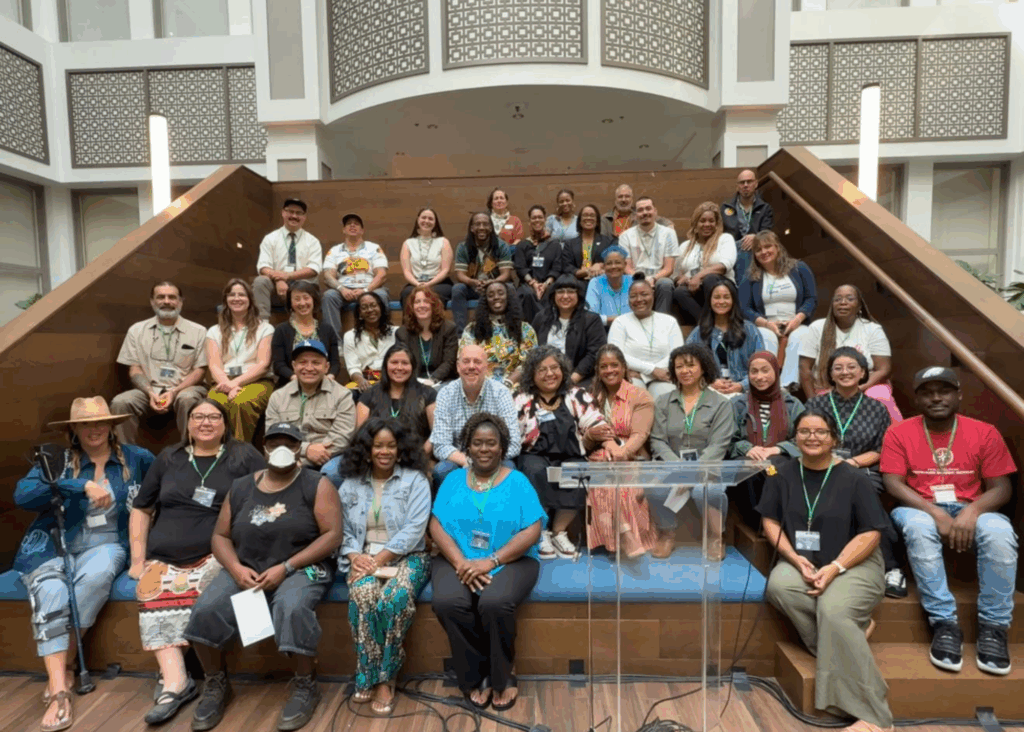
The Chicago Muslims Green Team (CMGT) is a small and young nonprofit. This October, we will be a 5-year-old 501(c)(3) organization. We are humble and grateful to have been given the chance to attend Justice Outside’s Unite and Ignite Conference in Philadelphia, Pennsylvania, from September 22 to 24.
CMGT was represented by CEO Dr. Layalee Beirat and me, Tree Equity Program Manager. It was our first time visiting Philadelphia, and we were happy to learn that there are many Muslims in the city. We made great connections with local Muslims at the conference.
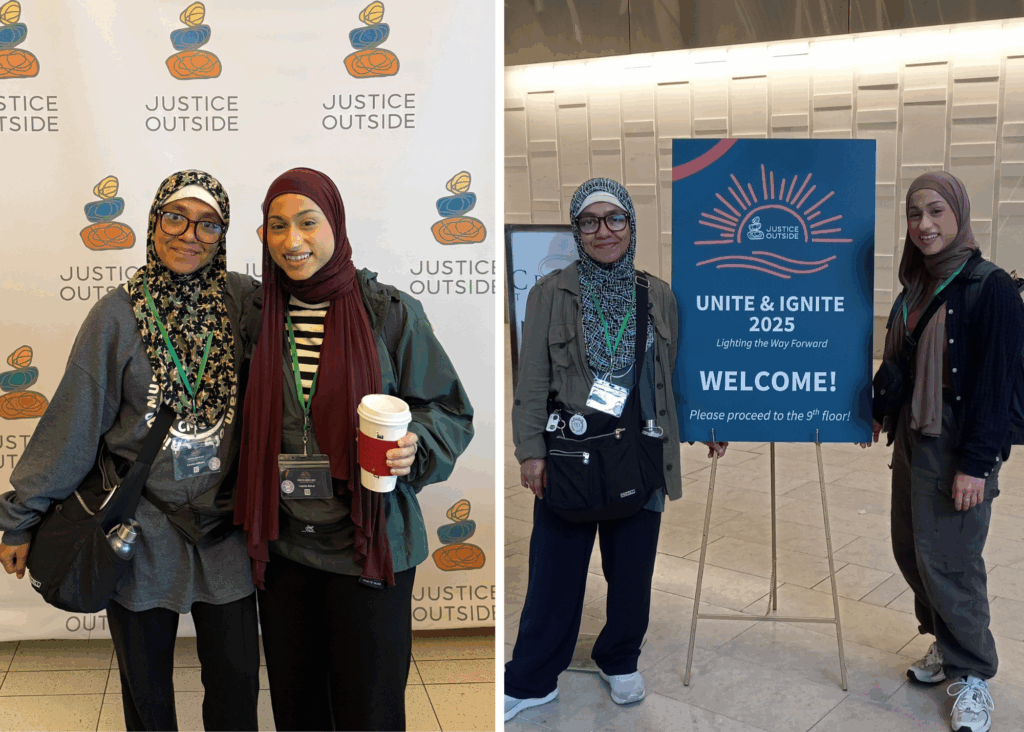
On the first day, I explored the city’s public transportation while CEO Beirat attended the Exclusive Pre-Conference Gathering for Grantees Only. I usually judge a city I visited based on the quality of its public transportation. I do not drive and I travel everywhere by bus or train. For me, it’s the best way to experience a city like a local does. I was impressed with the options available and I was excited to try the SEPTA trolley lines (T), something we do not have in Chicago. It is the descendant of a pre-World War II streetcar system.
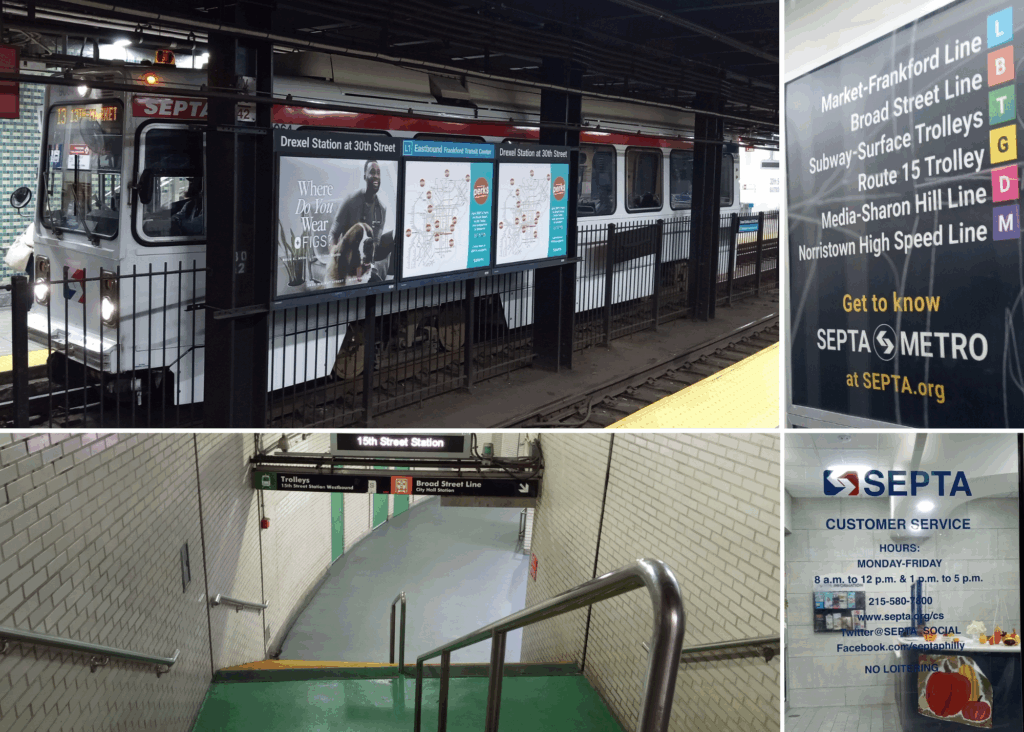
Southeastern Pennsylvania Transportation Authority (SEPTA)
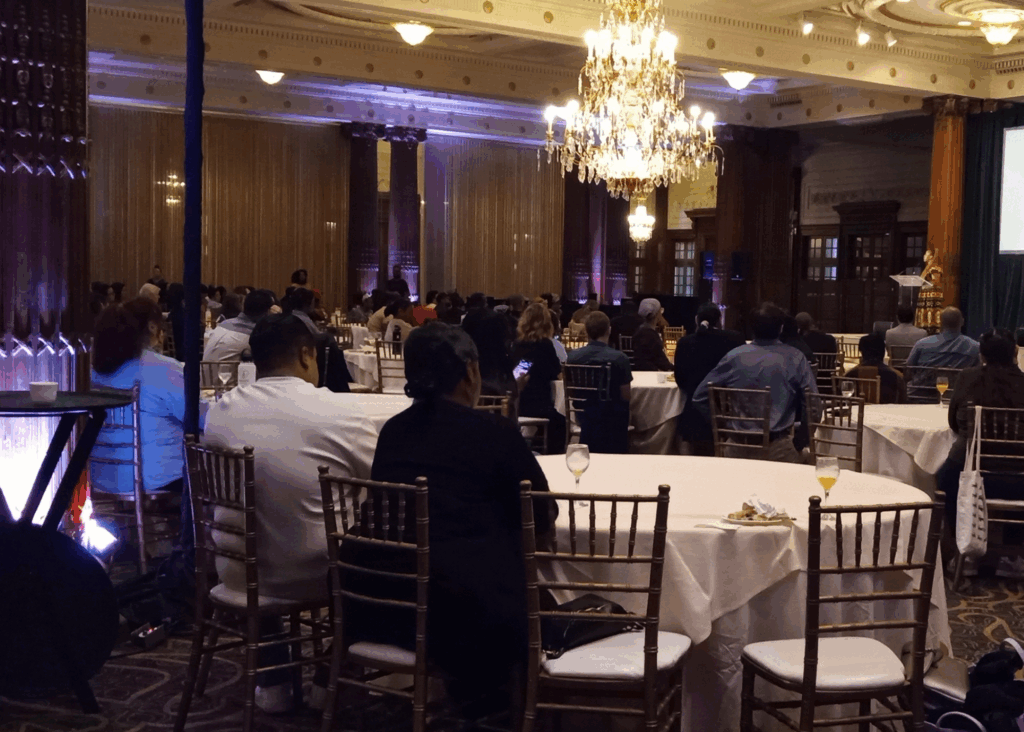
The conference took place at the historic Crystal Tea Room, located in the Wanamaker Building. It opened in 1911 and was designed to be a grand dining space featuring chandeliers and classic architecture. When I arrived, I felt a sense of luxury and a high class of sophistication, usually enjoyed by European aristocrats. I imagine that, in the past, as an immigrant and a person of color, I would not have been allowed to enter the room. But here I was, with other people like me, many of whom run community urban and rural farms, dealing with soil and dirt in outdoor setting and wearing different kind of clothes that match our personalities. We were there enjoying a good breakfast and getting to know each other. For me, this is a sign of progress.
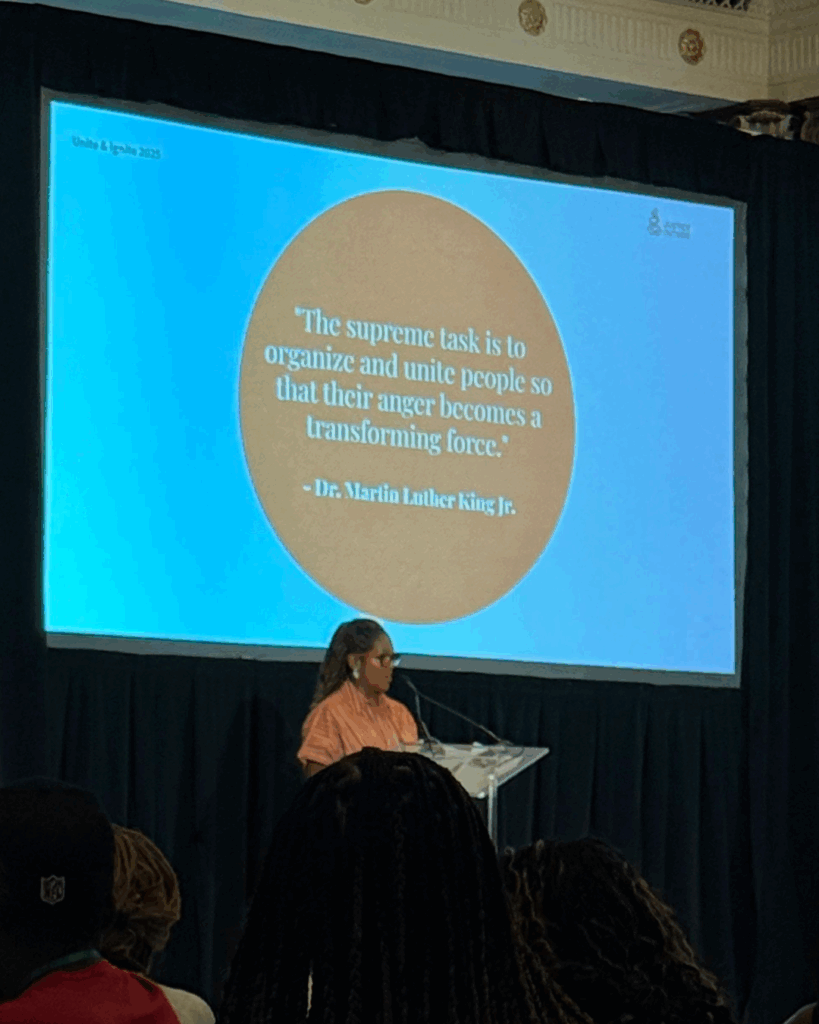
The opening remarks by Ronda Chapman, Kim Bailey, and Michelle Barakat from Justice Outside, followed by with keynote speaker Daniel Hunter from Choose Democracy, were inspiring. We were reminded of the importance of being united in turning our anger into a positive force for change. A quote from Dr. Martin Luther King, Jr. was displayed: ‘The supreme task is to organize and unite people so that their anger becomes a transforming force.’
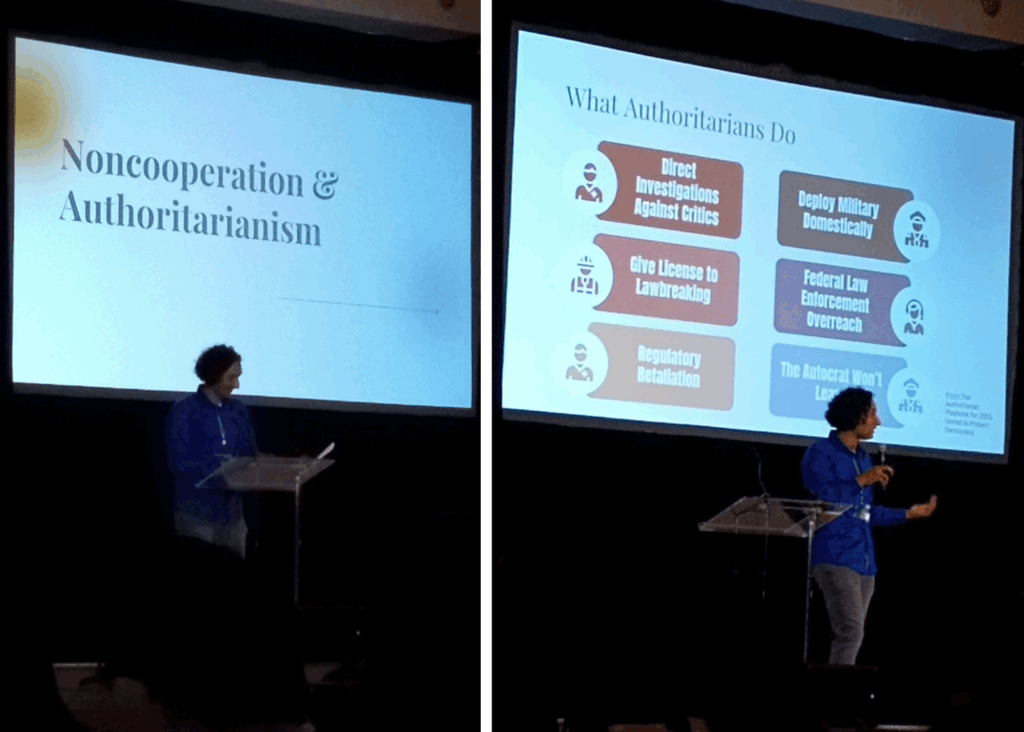
In his speech titled “Noncooperation and Authoritarianism,” Daniel Hunter identified what authoritarians do. One of them is, ‘The Autocrat Won’t Leave.’ This is unfortunately true.
I have been thinking that the U.S. will be 250 years old next year and is still facing the threat of authoritarianism, with their mission to make white supremacism great again. Compare that to many countries that are less than 100 years old, which gained independence in the mid-1900s after centuries of opposing Western colonization and supremacism.
I came from Indonesia, a country that fought for freedom from three centuries of Western colonialism and gained independence in 1945. As a student in Indonesia, I experienced living under a dictatorship that was in power for almost three decades and was forced to resign after massive protests and political, social, and economic unrest throughout the country in the late ’90s. I have heard that authoritarianism is making a comeback there.
For me, the fight against authoritarianism is a long struggle that may never end in our very short lifetimes. But it defines who we are. Are we simply accepting injustice, or are we standing against it?
One thing we must not forget in our struggle is to keep joy in our lives, as it is a form of resilience. I was happy to discover that joy was a theme shared at this conference. I could feel how everyone works with love and passion for their communities. I learned a lot from a session titled “Joy Is Strategy: Centering Black and Brown Communities Through Festivals, Culture, and Land-Based Healing.”
In this fun, interactive workshop led by Teria Powell from Building Bridges in Washington, D.C., we explored how culturally rooted festivals can be powerful tools for environmental justice, healing, and land connection, using case studies from Washington, D.C. During the workshop, we literally had to get up from our chairs, connect with another participant, and write a letter to our colleague about one thing we will do in the next 30 days to move our work forward. The letter will be sent to our addresses via snail mail, not electronic mail.
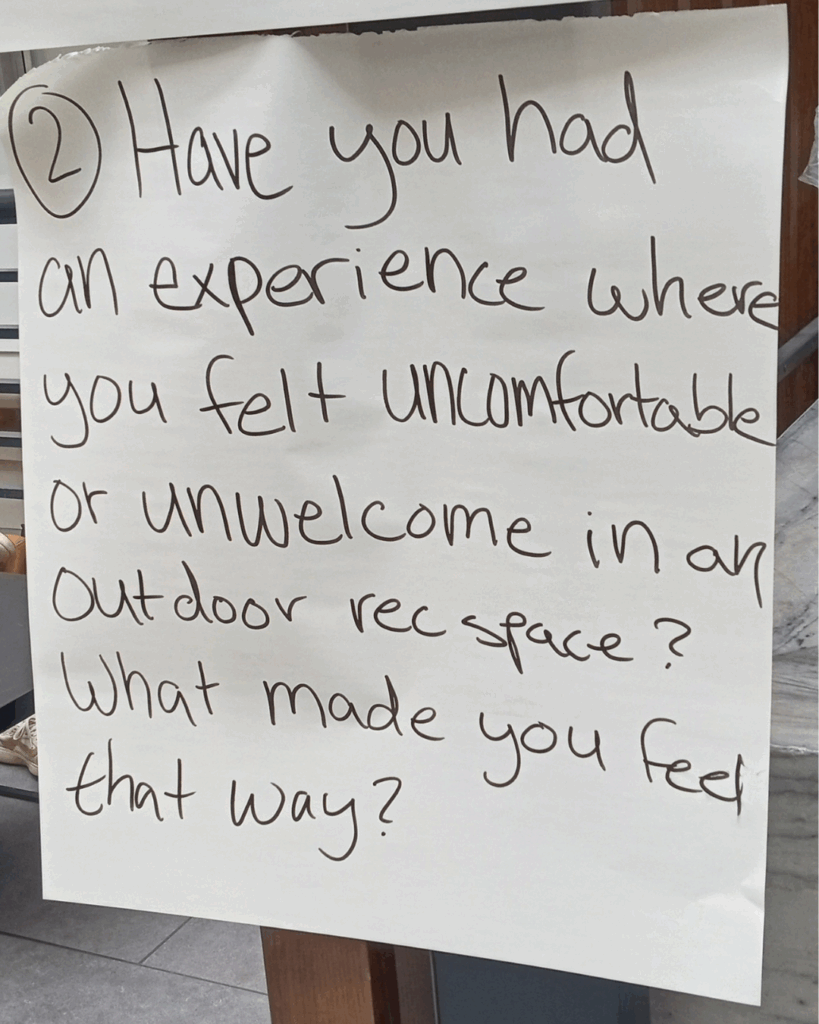
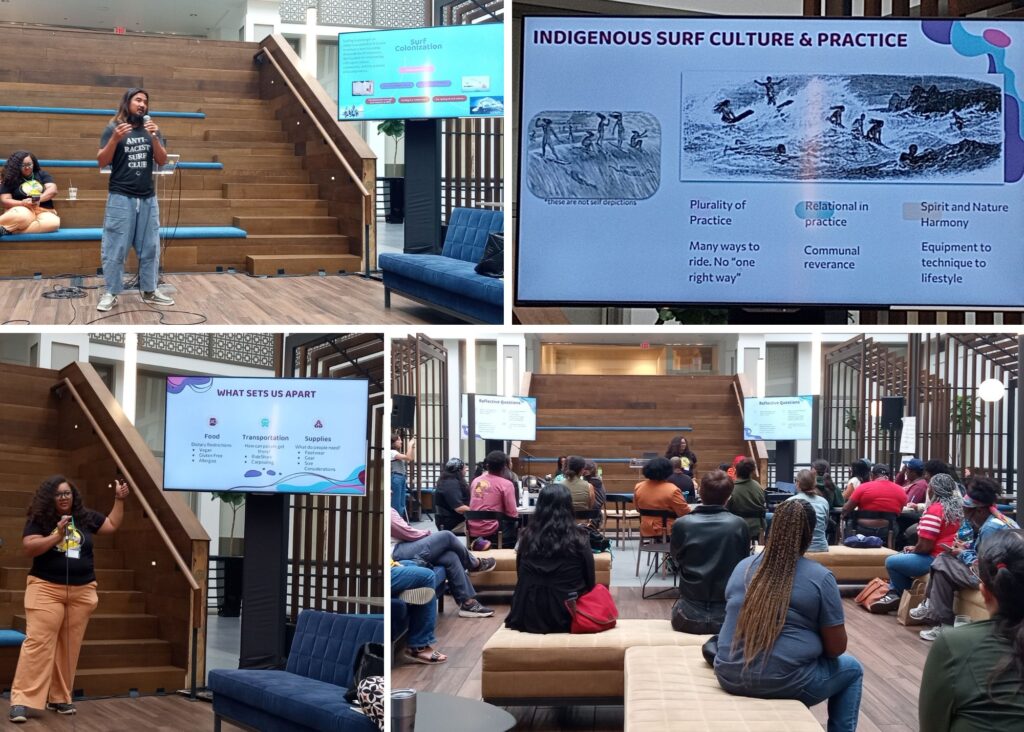
Another inspiring session I attended was titled “Beyond Representation: Challenging Exceptionalism in Outdoor Recreation Practices and Culture,” led by David Malana from Color the Water in L.A. and Hanan Robinson from the Build Love Advocacy Center in Arizona.
Hanan emphasized the importance of free access to outdoor activities for everyone, including gear that fits our body shapes. This reminded me of the barriers I used to have in my mind, such as thinking my legs were too short for rock or wall climbing. Additionally, at our recent wall climbing event in Chicago, two young Muslim girls demonstrated great climbing skills. Their parents told us that if we had not organized this event, they would not have come out.
David talked about bringing the joy of surfing to Black Lives Matter activists and reminded us that Indigenous Americans were experts in surfing, using gear made from natural materials. He also highlighted how surfing was part of social, cultural, and community activities, as seen in Hawaii, before being whitewashed by colonizers and transformed into a competitive sport dominated by Westerners.
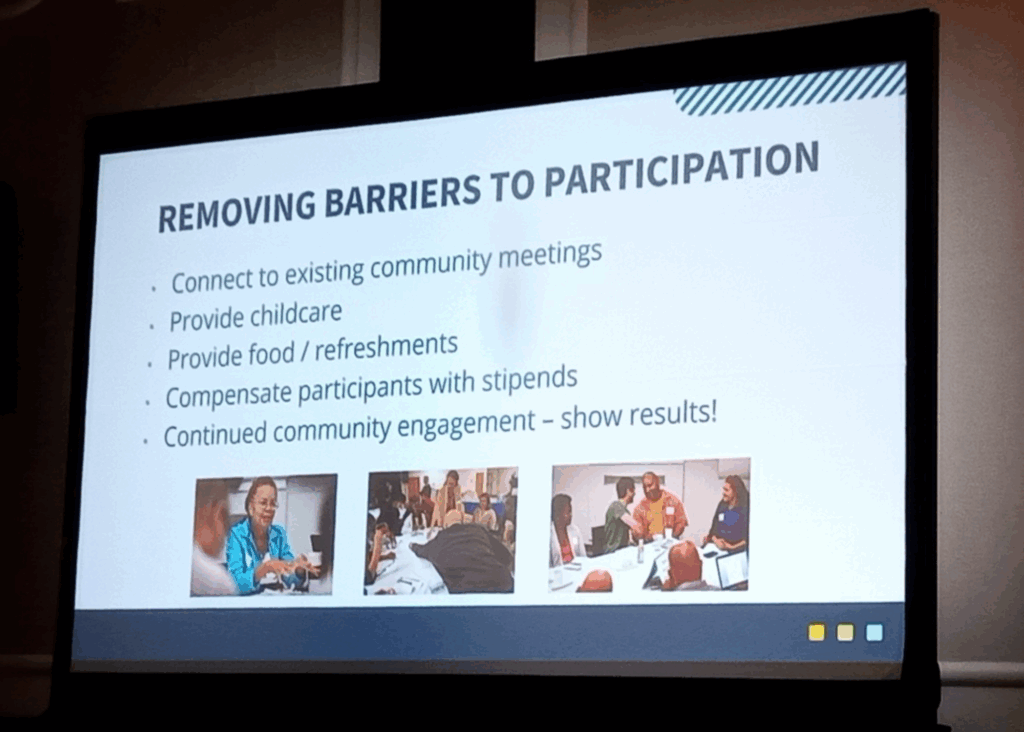
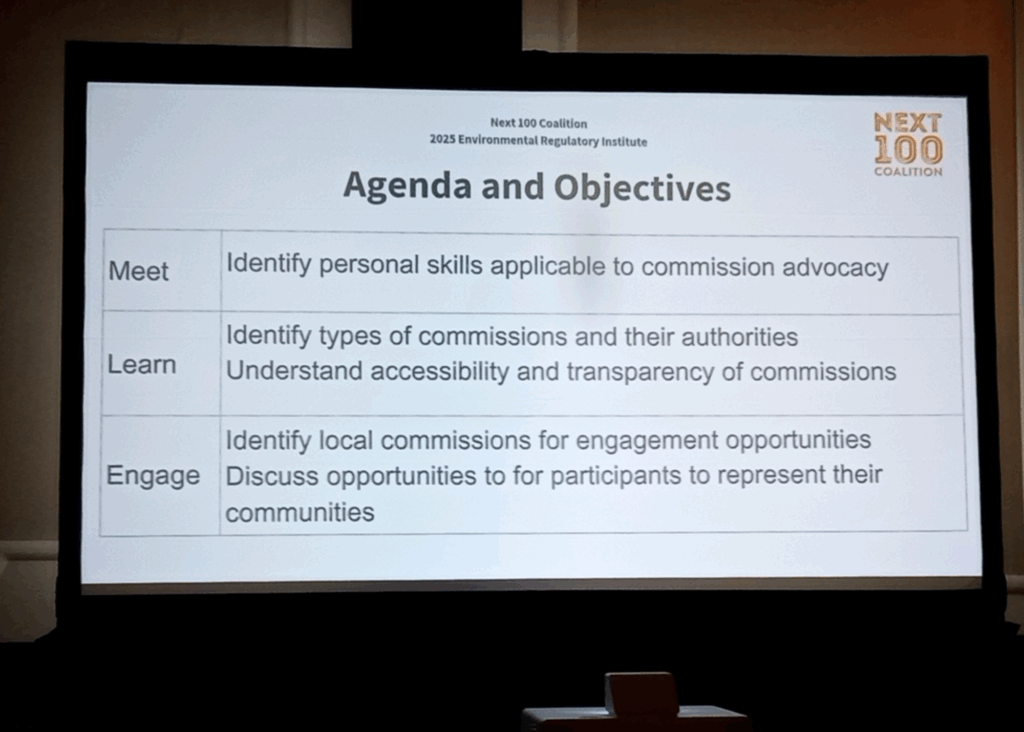
I also attended an informative workshop titled “Represent Your Community: Environmental Commissions 101.” Speakers Jonathan Tyrrell and Karyn Bigelow from the Next 100 Coalition shared facts about environmental commissions that make decisions regarding millions to billions of dollars in local, state, and federal funding, directly impacting outdoor access, public health, and the local environment. However, community representation is often significantly lacking in these spaces.
In this session, we first learned how to identify the commissioners, and we were encouraged to attend their public meetings to represent our community. I fully support this initiative because, since 2018, I have been attending these public meetings. I also joined the City Bureau Documenters to receive training and get paid to write reports or live-tweet from the meetings. This is just one of many ways to contribute to our society, to represent and empower our communities.
Overall, the conference lived up to its title, “Unite and Ignite.” I felt fired up joining Assata’s Chant with our fists in the air:
It is our duty to fight for our freedom!
It is our duty to win!
We must love and support one another!
We have nothing to lose but our chains!
Great reflection Caroline. I enjoyed reading and learning about so many new things I did not know. Sound like a great conference. Thank you for sharing g.
Thank you!