
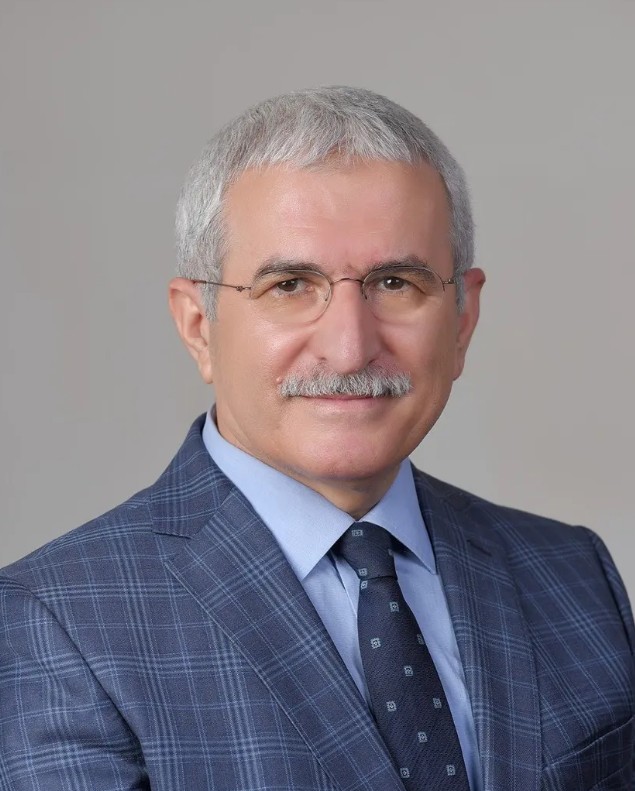
Ibrahim Ozdemir,
Professor of Philosophy
American Islamic College, Chicago
Vice President for Academic Affairs
iozdemir@aicusa.edu
Dr. Ibrahim Özdemir is a philosopher, educator, and environmental ethicist whose career bridges academia, public policy, and interfaith dialogue. His work embodies a synthesis of intellectual rigor, ethical conviction, and a commitment to advancing justice, sustainability, and peace.
Trained in philosophy and public policy, Dr. Özdemir explores the intersections of faith, governance, and environmental ethics. His scholarship—spanning books, essays, and international publications—illuminates the moral and theological foundations of ecological and social well-being. As an educator, he has taught courses on environmental ethics, religion and ecology, and the ethics of governance at institutions including Harvard University, Clark University, Hartford Seminary, and Åbo Akademi University (Finland), transforming classrooms into spaces of inquiry, reflection, and ethical engagement.
Beyond academia, Dr. Özdemir has worked with OECD, UNESCO, and UNEP, linking philosophical reflection with global policy. His contributions to the Islamic Declaration on Climate Change (2015) and Al-Mizan: A Covenant for the Earth (UNEP, 2024) exemplify his leadership in integrating Islamic ethics into international sustainability efforts.
A prolific communicator, Dr. Özdemir engages diverse audiences through writing, lectures, and media commentary, bridging scholarly discourse and public consciousness. His reflections on theology, ethics, and environmental justice inspire new moral perspectives for an interconnected world.
A certified philosophical counselor, he integrates philosophical insight with practical guidance, helping individuals cultivate clarity, resilience, and moral awareness in times of personal and societal change.
Dr. Özdemir is also a committed advocate for interfaith and intercultural dialogue, participating in global gatherings such as the Parliament of the World’s Religions (Chicago, Cape Town, Barcelona) and the G20 Interfaith Summit (Istanbul, Germany). In these forums, he advances the role of religion and ethics in promoting peace, sustainability, and coexistence.
In 2024, he co-designed and taught the online course “Environmental Justice: Theory, Practice, and Change” at The New School (NYC), which attracted 450 students from over 40 countries—a testament to the global resonance of his work and his dedication to inclusive, transformative education.